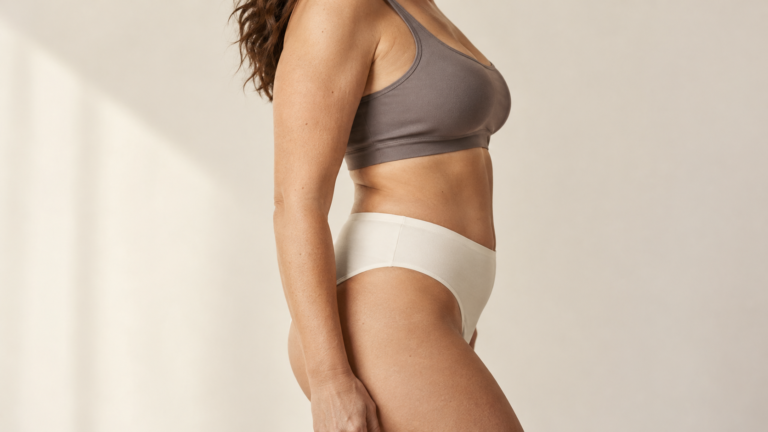
Cellulite affects the overwhelming majority of women at some point in their lives and yet it remains one of the most persistently difficult cosmetic concerns to treat. Creams largely fail to deliver. Lifestyle changes help, but rarely eliminate it entirely. And the surgical options that do exist come with significant recovery time and risk.
Morpheus8 has generated growing interest as a non-surgical option for improving the appearance of cellulite. But does it actually work? And if so, how much improvement can you realistically expect? This article gives you an honest, evidence-informed answer.
What Is Cellulite, and Why Is It So Difficult to Treat?
Before evaluating any treatment, it helps to understand what cellulite actually is — because it is often misunderstood as simply excess fat.
Cellulite is caused by a structural issue within the skin. Beneath the surface, fibrous bands of connective tissue called fibrous septa anchor the skin down to the underlying muscle. When the fat cells between these bands expand — due to weight gain, hormonal changes, ageing, or genetics — they push upward against the skin while the septa pull downward, creating the characteristic dimpled appearance.
This structural complexity is precisely why cellulite is so resistant to topical treatments. Creams and lotions can temporarily improve hydration and surface texture, but they cannot reach the fibrous septa or the fat layer beneath the dermis. To make a meaningful difference, a treatment needs to work at depth — within and below the dermis itself.
This is where Morpheus8 becomes relevant.
How Morpheus8 Targets Cellulite
Morpheus8 combines two technologies: precision microneedling and radiofrequency (RF) energy. During treatment, an array of gold-tipped microneedles penetrates the skin to a precisely controlled depth — up to 7 to 8mm on body settings, which is deeper than any other microneedling device on the market. At the same time, RF energy is delivered into the tissue, generating controlled heat at that exact depth.
For body treatments such as the thighs, buttocks, and abdomen, this depth is significant. It allows Morpheus8 to reach the dermis, the subcutaneous junction, and even the superficial fat layer — the very levels where cellulite forms.
The treatment works on cellulite in three main ways:
Collagen and elastin stimulation. The microneedling creates controlled micro-injuries that trigger the skin’s healing response. New collagen and elastin are produced in the weeks and months that follow, thickening and firming the skin itself. As skin becomes firmer and more resilient, it is less susceptible to the push-and-pull effect that creates dimpling.
Disruption of fibrous septa. Clinical evidence suggests that RF microneedling at the subcuticular junction may disrupt the excessive fibrous attachments responsible for pulling the skin downward. Releasing this tethering effect is one of the key mechanisms behind visible cellulite improvement.
Adipose tissue remodelling. The RF heat energy affects fat cells at depth, causing them to shrink and remodel. This reduces the volume pushing upward against the skin surface, further smoothing the overall appearance.
What Does the Evidence Say?
The clinical evidence is encouraging, though it is worth being honest about where the research stands.
A published case series evaluated Morpheus8 specifically for cellulite, using a 40-pin body tip on the upper thighs at both the dermal and subcutaneous level. Patients reported high satisfaction, with one patient describing “marked improvement” at the three-month follow-up. Her treating physician independently assessed improvement at between 50 and 74 per cent, with “very visible tightening and firmness.”
A separate clinical trial (NCT06283056) evaluating the Morpheus8 body tip for cellulite reduction reported improvements of between 25 and 74 per cent on global aesthetic scales across initial participants.
The research does acknowledge its limitations — particularly the relatively small number of participants in early studies. However, the science behind the mechanism is sound and consistent with what we understand about how RF microneedling affects skin and tissue at depth. Patient satisfaction in clinical and real-world settings has generally been high for those with mild to moderate cellulite.
It is important to note that Morpheus8 is most effective for skin-laxity-driven cellulite — where the dimpling is primarily caused by loose, thin skin that lacks the structural integrity to resist the push of underlying fat. For cellulite rooted in very deep or severe structural changes, results may be more modest.
Which Areas Can Be Treated?
Morpheus8 body treatment can be applied to any area of the body where cellulite is present. The most commonly treated areas include:
Thighs (inner and outer). This is the most frequently treated area for cellulite. The combination of skin laxity and fat distribution that causes thigh dimpling responds well to Morpheus8’s depth and energy settings.
Buttocks. Morpheus8 can improve both the surface dimpling and the underlying skin quality of the buttock area, including the “banana roll” beneath the buttocks where laxity and volume often combine.
Abdomen. For patients with loose skin and surface irregularity on the stomach — particularly following weight loss or pregnancy — Morpheus8 can improve texture and firmness. Stretch marks in the area may also respond.
Upper arms. Crepey, loose skin on the arms that has a dimpled quality can be improved with body settings of Morpheus8.
Knees. The inner knee is an area of laxity that many patients find difficult to address, and Morpheus8 body treatment can improve texture and firmness here as well.
What to Expect: Realistic Results
This is where honesty matters. Morpheus8 is not a cure for cellulite, and it is important to understand the distinction between improvement and elimination.
For patients with mild cellulite — light surface dimpling, moderate skin laxity — Morpheus8 can produce highly satisfying results, with noticeable smoothing and firming that meaningfully improves confidence.
For patients with moderate cellulite — more pronounced dimpling, a mix of skin laxity and fat-related texture changes — Morpheus8 can produce visible improvement, typically in the range of 30 to 60 per cent reduction in appearance, particularly with a full course of treatment.
For patients with severe cellulite — deep, structural dimpling with significant connective tissue involvement — Morpheus8 will likely produce some improvement, but realistic expectations are for meaningful reduction rather than elimination. In these cases, Morpheus8 may be recommended as part of a combination approach alongside other body contouring modalities.
Results are not immediate. Because the treatment works by stimulating the body’s own collagen production, improvement is progressive. Expect to see initial changes from around four to six weeks after your first session, with the most significant results developing at the three to six-month mark as new collagen matures.
At a Glance
| Treatment time | 45–75 minutes per area |
| Sessions recommended | 3–6 sessions |
| Session spacing | 4–6 weeks apart |
| Downtime | 2–5 days |
| Results visible from | 4–6 weeks |
| Full results | 3–6 months |
| Results last | 1–3 years (maintenance recommended annually) |
The Treatment Experience
Morpheus8 body treatment follows a similar process to facial treatment, with a few differences to reflect the larger areas and deeper settings used.
Before your session, topical anaesthetic cream is applied to the treatment area and left for approximately 45 minutes. This significantly reduces discomfort during the procedure. Because body areas have thicker skin and the needles penetrate deeper than in facial treatments, some patients do experience more sensation than they would with a facial Morpheus8 session — but the vast majority find it very manageable with the numbing in place.
The Morpheus8 handpiece is moved systematically across the treatment area. For the thighs or buttocks, your practitioner will typically treat in multiple passes at different depths to ensure comprehensive tissue remodelling at both the dermal and subcutaneous levels.
Following treatment, the area will be red and may feel warm and tender — similar to a mild sunburn. Some patients experience small surface pinpricks that resolve within two to three days. Swelling is common in larger body areas and may persist for three to five days. Most patients are comfortable returning to everyday activities within two to five days, though more physically demanding exercise should be avoided for approximately a week.
Aftercare for Body Treatment
Aftercare for Morpheus8 body treatment follows similar principles to facial treatment, with a few additional considerations for larger areas:
Keep the treated skin clean and well-moisturised in the days following your session. Avoid tight clothing over the treated area for 24 to 48 hours, which can cause unnecessary friction and irritation. Sun protection should be applied to any treated area that is exposed — UV damage is the single biggest threat to newly forming collagen. Avoid hot baths, saunas, and high-intensity exercise for 48 hours, as raising the body’s core temperature too soon after treatment can interfere with the healing response. If your thighs or buttocks have been treated, avoid prolonged sitting on hard surfaces for the first day or two.
Attend your scheduled follow-up sessions — with body treatments, the cumulative effect of a full course of 3 to 6 sessions makes a significant difference to the overall outcome.
Frequently Asked Questions
Does Morpheus8 actually reduce cellulite, or just improve skin texture? Both. Morpheus8 addresses cellulite through two distinct mechanisms: it tightens and thickens the skin itself, which reduces the visual impact of the underlying structure; and at greater depths, it disrupts the fibrous septa and remodels the fat layer that contribute to dimpling. The result is improvement in both skin quality and the underlying cause of cellulite.
How many sessions will I need? For cellulite, most practitioners recommend between 3 and 6 sessions spaced 4 to 6 weeks apart. Patients with milder concerns may see satisfying results from 3 sessions; more pronounced cellulite typically benefits from a longer course. Your practitioner will recommend a tailored plan at your free consultation.
Can Morpheus8 be combined with other body treatments? Yes, and in many cases a combination approach delivers the best results. Morpheus8 works particularly well alongside treatments that target the fibrous septa from a different mechanism — such as acoustic wave therapy — or as a complement to body contouring treatments. Your practitioner at House of Aesthetics will advise on the most appropriate combination for your specific concerns.
Is the body treatment more uncomfortable than the facial treatment? Body areas tend to be treated at greater needle depth and with higher energy settings than the face. With thorough topical numbing applied beforehand, the treatment is well-tolerated by the majority of patients, though it may feel more intense than a facial session. Let your practitioner know if you feel uncomfortable at any point — settings can always be adjusted.
Will cellulite come back after Morpheus8? The structural improvements from Morpheus8 are long-lasting — new collagen and elastin produced during your course of treatment remain. However, cellulite is influenced by ongoing factors including hormonal changes, weight fluctuation, and the natural ageing process. Most patients find their results last one to two years before a maintenance session becomes beneficial.
Who is not suitable for Morpheus8 body treatment? Morpheus8 is not suitable during pregnancy or breastfeeding. It should also be avoided if you have active skin infections, open wounds, or inflammatory skin conditions in the treatment area. Patients with implanted electrical devices such as pacemakers are not suitable candidates. A full medical history will be taken at your consultation.
Is Morpheus8 Worth It for Cellulite?
For the right patient, yes. If you have mild to moderate cellulite and are looking for a non-surgical treatment that addresses the underlying causes rather than simply masking the surface, Morpheus8 represents one of the most clinically credible options available. It does not require incisions, there is no surgical recovery, and it works with your body’s own regenerative processes.
The key is having realistic expectations going in. Morpheus8 will not eliminate severe, deep-rooted cellulite in a single session. But with a properly planned course of treatment, most patients see a meaningful and confidence-restoring improvement in the areas that matter most to them.
Ready to Discuss Your Concerns?
If cellulite on the thighs, buttocks, or stomach has been bothering you and you want an honest assessment of what Morpheus8 can realistically achieve for you — we would love to hear from you.
Book your free, no-obligation consultation at House of Aesthetics in Bromley. Our practitioners will take the time to assess your skin, explain your options, and design a treatment plan tailored to your goals. Call us on 020 8290 0099, visit us at 14 Market Square, Bromley BR1 1NA, or book online at your convenience.