Most people first encounter Morpheus8 in the context of facial treatments: the jawline, under the eyes, the neck. What is less widely known is that the same technology can be used on the body to address skin laxity, texture and firmness in areas that are notoriously difficult to treat without surgery. If you have loose or crepey skin on your stomach, arms, thighs or elsewhere, and you are exploring what is possible without going under the knife, this article explains how Morpheus8 works on the body and which areas it is suited to.
How Morpheus8 Works on the Body
Morpheus8 is a radiofrequency microneedling device. During treatment, an array of fine needles penetrates the skin at a precisely controlled depth and delivers radiofrequency energy into the deeper layers of tissue below the surface. The heat generated stimulates the body’s natural collagen and elastin production, remodelling the tissue from within rather than working purely at skin level.
On the body, Morpheus8 uses a larger handpiece than is used on the face, covering more surface area in each pass. The needle depth can be adjusted to suit the thickness of tissue in different treatment zones, which is what makes it adaptable across a range of body areas. The treatment targets both the dermis and the subdermal fat layer beneath it, which is why it can address not just surface texture but also the underlying structure that determines how skin sits and behaves.
A published case study in the Journal of Clinical and Aesthetic Dermatology documented subcutaneous radiofrequency microneedling on the medial thighs of a patient with significant skin laxity following major weight loss. Blinded dermatologists rated both skin laxity and cellulite appearance as improved following two sessions, and the patient’s cellulite severity score dropped from 14 to 9 on a validated scale. The authors noted that while surgical correction remains the most dramatic option for advanced cases, RF microneedling offers a credible non-surgical alternative. (Source: Journal of Clinical and Aesthetic Dermatology, 2019)
Which Body Areas Can Morpheus8 Treat?
Stomach and Abdomen
The abdomen is one of the most common body areas requested for Morpheus8 treatment. Loose skin on the stomach can result from pregnancy, significant weight loss, or the gradual collagen decline that comes with age. It is an area where conventional non-surgical treatments often fall short, because the concern is structural: the skin has lost its internal scaffolding and cannot simply be firmed from the surface.
Morpheus8 addresses this by delivering radiofrequency energy into the subdermal tissue of the abdomen, stimulating new collagen formation at depth. The result, over a course of sessions, is a gradual tightening and improvement in the texture of the skin across the treatment area. It is not a substitute for surgical skin removal in cases of significant excess, but for mild to moderate laxity it can produce meaningful, visible improvement.
Arms
The upper arm is particularly prone to skin laxity as collagen and elastin decline with age. The skin on the inner arm is thin and has limited structural support, which means that even modest loss of firmness becomes noticeable. Morpheus8 can be used across the upper arm and inner arm area to stimulate collagen remodelling and improve the tone and texture of skin that has become loose or crepey. A course of treatments typically delivers a progressive tightening effect that develops over several weeks.
Thighs
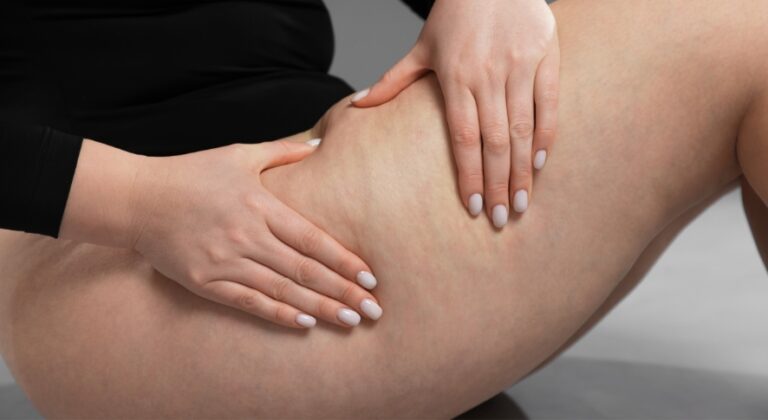
Both the inner and outer thighs respond well to Morpheus8 body treatment. Skin laxity on the thighs is often accompanied by concerns about texture and surface irregularity. Because Morpheus8 works at the subdermal level, it can address both the structural laxity and the appearance of the skin surface in a single treatment protocol. The inner thigh in particular is a zone where many patients notice looseness that they feel self-conscious about, and where non-surgical options have historically been limited.
Buttocks and Flanks
The buttocks and flanks are treatable with Morpheus8 Body. In these areas, the treatment is primarily used to improve skin quality and firmness rather than to reshape or contour. Patients who notice a loss of definition or increasing skin laxity in the lower body often benefit from a combined approach, and Morpheus8 fits naturally into a broader body treatment plan.
Knees
The skin around the knees is frequently overlooked but can become visibly loose with age, particularly on the inner aspect and just above the kneecap. Morpheus8 can be applied carefully to this area to improve firmness and texture. It requires a considered approach from your practitioner, as the anatomy around the knee differs from flat body surfaces, but it is a treatable zone and one that patients often appreciate having addressed as part of a leg treatment plan.
Décolletage
The chest and décolletage area is often one of the first places to show sun damage and age-related skin thinning, particularly in patients who have spent time in the sun without adequate protection. Morpheus8 can be used here to improve skin quality, firmness and texture. The décolletage sits at the transition between the face and neck treatments and the body, and treating it as part of a broader plan can produce a more cohesive result across the upper body.
What Morpheus8 Body Cannot Replace
It is worth being clear about what Morpheus8 Body is and is not. It is a skin tightening and remodelling treatment: it improves the quality, firmness and tone of existing skin by stimulating new collagen from within. It does not remove fat and is not a body contouring procedure in the same way that treatments targeting fat cells are. For patients whose primary concern is stubborn fat rather than skin laxity, a different treatment approach is more appropriate.
Similarly, in cases of advanced skin laxity where there is a significant quantity of excess skin, a surgical consultation may ultimately offer a more complete solution. Your practitioner will assess this honestly at your initial consultation and will not recommend a treatment course that is unlikely to meet your expectations.
What to Expect at Your Appointment
Your Morpheus8 Body treatment at House of Aesthetics London begins with a consultation in which your practitioner assesses the treatment area, discusses your goals and confirms your suitability. On the day of treatment, topical anaesthetic is applied to ensure comfort. Depending on the size of the treatment area, a session typically takes between 30 minutes and 90 minutes.
Some redness and mild swelling in the treated area is normal in the days following treatment, and most patients return to everyday activity within a few days. For body areas, a course of three sessions spaced four to six weeks apart is standard, with results continuing to develop for up to six months as the collagen remodelling process progresses.
Pricing for Morpheus8 Body starts from £750 per session, with a course of three available from £1,800. 0% finance options are available. You can book online or call to arrange your consultation.
Combining Morpheus8 Body with Other Treatments
Morpheus8 Body works well as part of a broader treatment plan. Patients addressing loose skin on the stomach, for example, may also wish to consider treatment for the arms or thighs in the same course, allowing your practitioner to sequence sessions efficiently. Where surface texture is a concern alongside laxity, loose skin treatment options can be discussed at consultation to identify the most complementary approach.
For patients also addressing facial and neck concerns, Morpheus8 Face and Neck can be incorporated into the same treatment plan, creating a cohesive programme that works from the face downward. Your practitioner will discuss which sequence and combination is most appropriate for your individual goals. More detail on what Morpheus8 involves as a technology and treatment is available on our Morpheus8 treatment page.
Frequently Asked Questions
Is Morpheus8 Body safe for all skin types?
Morpheus8 is considered suitable for a wider range of skin tones than many energy-based devices because the radiofrequency energy is delivered below the skin surface rather than targeting melanin. However, suitability is always assessed individually at consultation. Factors including skin condition, active skin concerns and your medical history are all taken into account before treatment is recommended.
How soon will I see results from Morpheus8 Body?
Some patients notice an initial improvement in skin texture quite soon after treatment as the skin responds to the stimulation. The more significant tightening and remodelling effects develop gradually over six to twelve weeks as new collagen matures. The full benefit of a course of three sessions is typically visible at around three to six months after the final session.
Is Morpheus8 Body painful?
Topical anaesthetic is applied before treatment to minimise discomfort. Most patients describe the sensation during treatment as a warm pressure rather than pain. Body areas with thicker skin or more subdermal tissue are generally well tolerated. Your practitioner will ensure you are comfortable throughout, and settings can be adjusted if needed.
How many sessions are needed for the stomach?
A course of three sessions is the standard recommendation for the abdomen. The degree of laxity, your skin type and the outcome you are hoping to achieve will all influence how your practitioner structures your plan. Some patients with milder concerns may see satisfying results from fewer sessions; others may benefit from a maintenance session several months after their initial course.
Can Morpheus8 help with stretch marks on the body?
Radiofrequency microneedling can improve the appearance of stretch marks by stimulating collagen remodelling in the affected tissue. Results vary depending on the age, depth and colour of the stretch marks. Your practitioner will assess the area at consultation and give you a realistic expectation of what improvement is achievable for your specific concern.
What is the difference between Morpheus8 Face and Morpheus8 Body?
The technology is the same: radiofrequency energy delivered through fine microneedles to stimulate collagen production. The difference lies in the handpiece used. The body handpiece covers a larger surface area per pass and can be set to greater needle depths to suit the thicker tissue on the body. The face handpiece is smaller and more precise, designed for the thinner and more contoured anatomy of the face and neck. In practice, many patients have both areas treated as part of a comprehensive plan.
Is there downtime after Morpheus8 Body treatment?
Redness and mild swelling in the treated area are normal for two to four days after treatment. The skin may feel tender to the touch during this period. Most patients resume everyday activities within a few days. Strenuous exercise and prolonged heat exposure, such as saunas or hot baths, are usually avoided for the first few days after treatment. Your practitioner will provide full aftercare guidance at your appointment.
Book Your Morpheus8 Body Consultation in Bromley
If you would like to find out whether Morpheus8 Body is suitable for your concern, we offer complimentary consultations at our Bromley clinic. Your practitioner will assess the area, discuss what is realistically achievable and outline the treatment plan best suited to your goals.
Call 020 8290 0099 | 14 Market Square, Bromley BR1 1NA | Book online
Medical disclaimer: The information in this article is intended for general educational purposes only and does not constitute medical advice. Individual results from any aesthetic treatment vary from person to person. All treatments at House of Aesthetics London are carried out following a clinical consultation to assess your suitability. Please speak with a qualified practitioner before proceeding with any aesthetic procedure.